


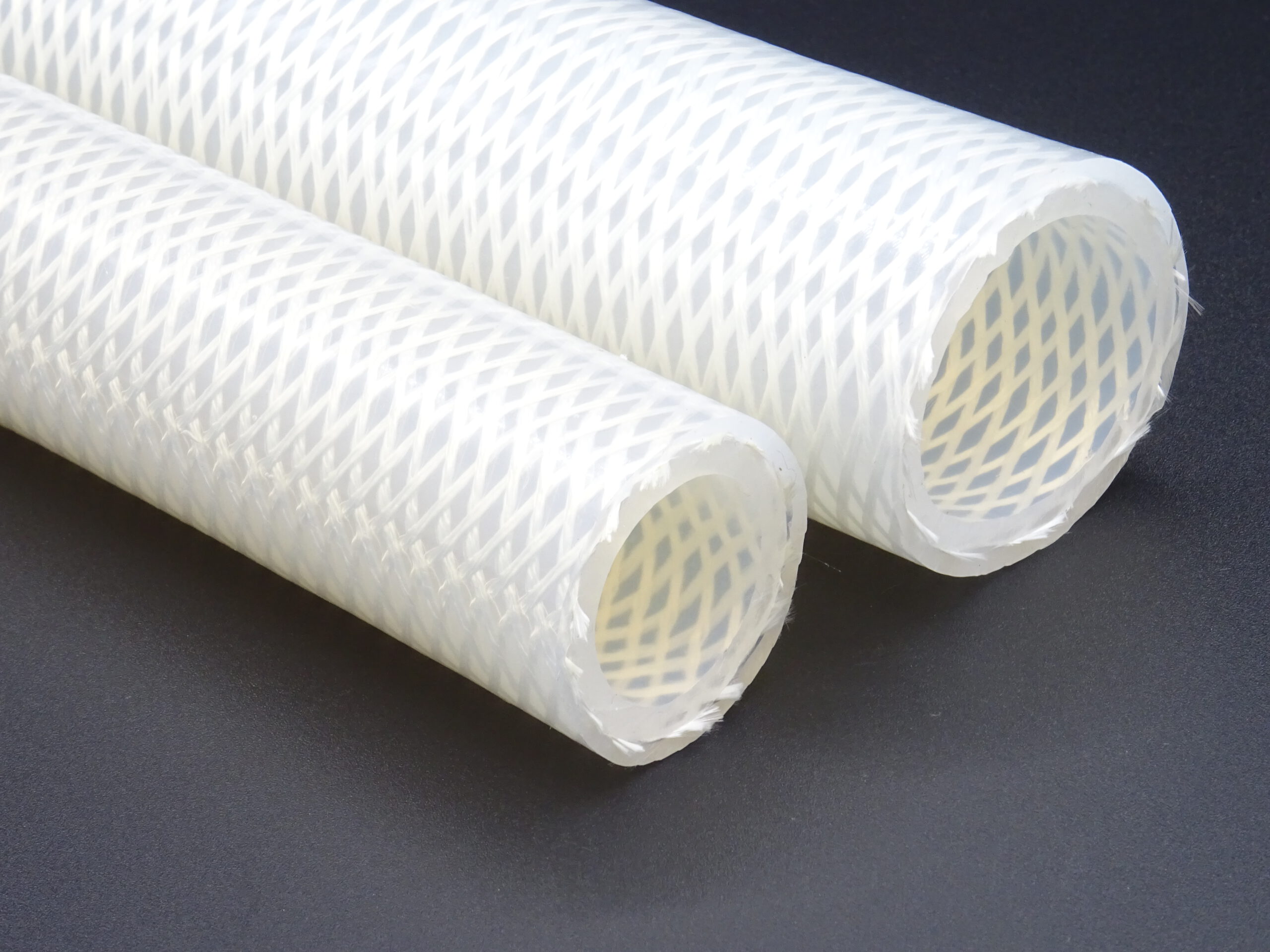
Silicone fabric hoses - textile reinforced and food compliant
Lindemann Silikon GmbH & Co.KG
Your Specialist in silicone
Contact now
TL;DR – the key information at a glance
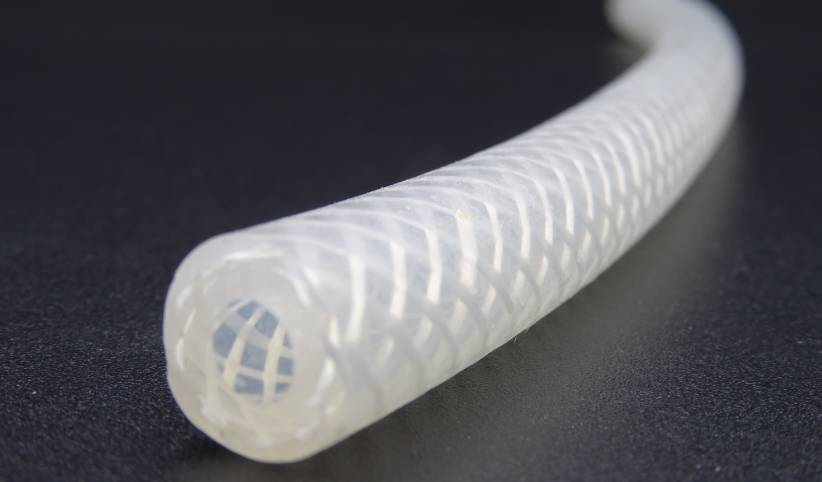
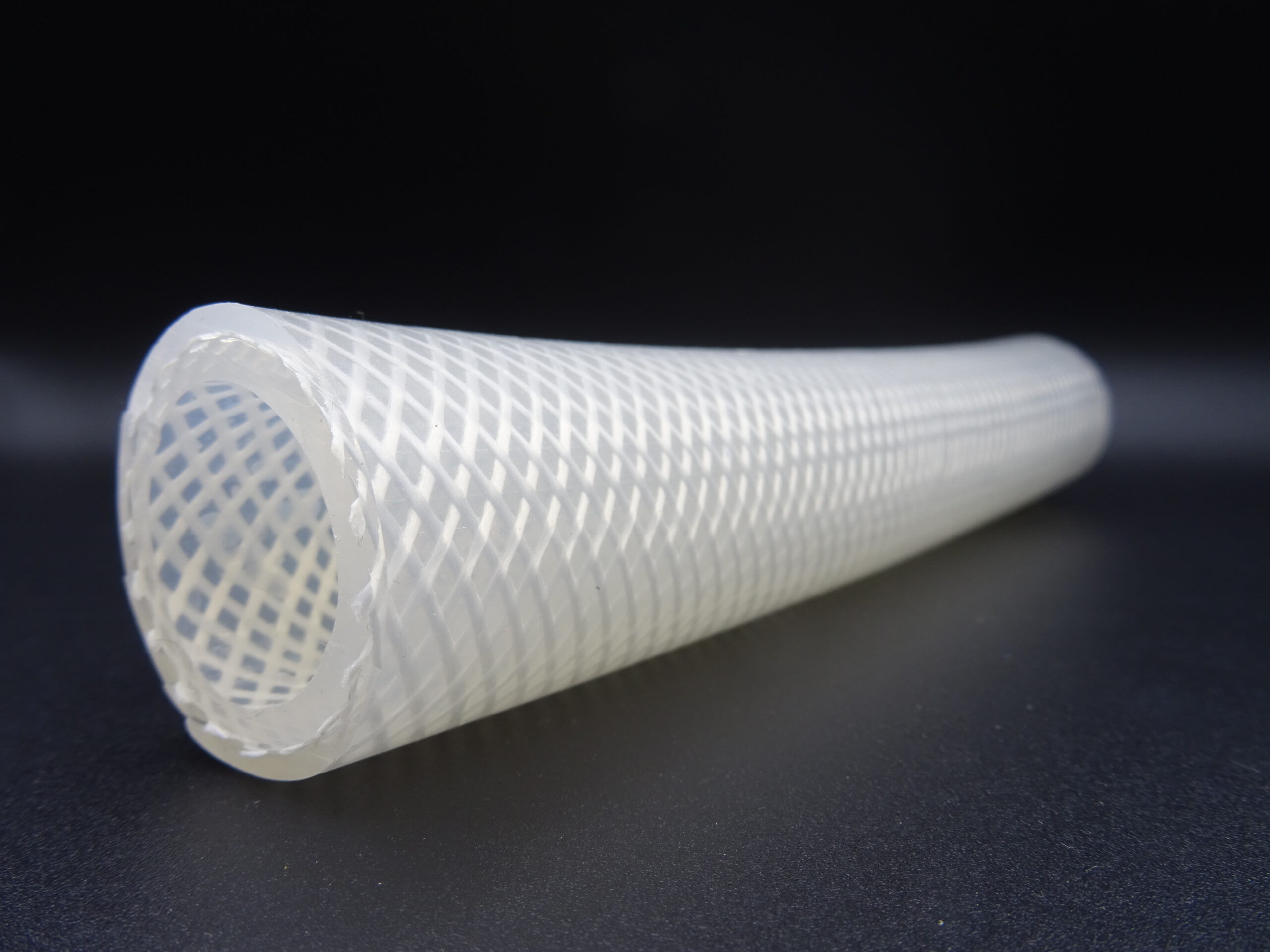
Silicone hoses – in particular fabric-reinforced silicone hoses – are a strong solution for conveying AdBlue (AUS 32, DEF) in SCR exhaust systems, dosing modules and tank installations. They combine chemical resistance to the 32.5% urea solution with the pressure strength of a fabric reinforcement and retain their flexibility from –60 °C to +200 °C. While peroxide-cured EPDM is today the OEM standard for AdBlue pressure lines in trucks, silicone fabric hoses are the choice when higher temperatures, heated runs or particularly long service lives are required – in industrial SCR, marine and off-road applications as well as in the aftermarket. Lindemann Silikon manufactures fabric hoses for AdBlue applications individually to size.
Quick navigation
- Short answer: What are silicone hoses used for with AdBlue? For the safe, pressure-resistant transport of the urea solution – especially where higher temperatures or heated lines are required.
- Quick fact: What is the OEM standard for AdBlue lines? Peroxide-cured EPDM. Silicone fabric hoses are used where requirements exceed the EPDM profile (high temperature, heating, long service life, industry/marine).
- Short answer: Does silicone react with AdBlue? No. High-purity silicone is chemically resistant to urea and ammonia and contains no plasticisers that could migrate into the medium.
- Quick fact: Which standard applies? ISO 22241 (parts 1–4) defines AdBlue quality, testing, handling and refilling. Part 3 lists suitable materials in an informative annex.
- Short answer: Can the hoses be heated? Yes. Silicone is particularly well suited to heated lines because it permanently tolerates temperatures up to +200 °C – AdBlue freezes at –11 °C and must be actively warmed at low outside temperatures.

What is AdBlue and what role does the silicone fabric hose play?
AdBlue (a registered trademark of the VDA – the German Association of the Automotive Industry; technically AUS 32 – Aqueous Urea Solution 32.5% – or DEF, Diesel Exhaust Fluid) is an aqueous solution containing 32.5% high-purity urea in fully demineralised water. In SCR systems (Selective Catalytic Reduction) it is injected into the hot exhaust stream, where it hydrolyses to ammonia and then reduces nitrogen oxides (NOx) to nitrogen and water. The simplified overall reaction is NH₃ + NOx → N₂ + H₂O; stoichiometrically balanced, for example, 4 NH₃ + 4 NO + O₂ → 4 N₂ + 6 H₂O.
To convey AdBlue from the tank via the dosing pump to the SCR module, different hose materials are used depending on the application. In volume truck production, peroxide-cured EPDM dominates. Silicone fabric hoses are used above all where the thermal load, the need for heated lines or the required service life exceed the EPDM profile – typically in industrial SCR plants, marine and off-road engines, emergency generators, stationary CHP units and test benches.
Where are silicone fabric hoses used in the AdBlue circuit?
- Tank extraction line – suction line from the AdBlue tank to the feed pump; must remain cold-flexible and resistant to repeated thawing.
- Pressure line to the dosing module – modern airless SCR dosing systems in trucks (e.g. Bosch Denoxtronic 2.2 and successors) typically operate at approx. 5 – 9 bar; industrial SCR plants for large engines can run higher pressures.
- Heated lines – combined with heating tape, heating jacket or coolant jacket; AdBlue freezes at –11 °C and expands by approx. 7% on solidifying, which is why frost protection and a heating option must be provided for in the design.
- Return line from the dosing module – pressure relief and purging on shutdown, preventing crystallisation at the injection nozzles.
- Filling and venting lines – flexible connections at service points and workshop test benches.
- Test bench and laboratory installations – measuring and dosing equipment on engine test benches, emission tests and qualification tests to ISO 22241-2.
Material comparison: silicone fabric hose versus EPDM, NBR and PVC
AdBlue is a demanding medium: slightly alkaline (pH approx. 9–10), corrosive towards many non-ferrous metals, prone to crystallising on evaporation and sensitive to contamination. An overview of the most important hose materials:
- EPDM (peroxide-cured) – today the OEM standard for AdBlue pressure lines in volume commercial-vehicle production. Pressure-resistant, chemically resistant, technically proven. Upper temperature limit typically up to +120 °C continuous – sufficient for standard truck applications.
- NBR (nitrile rubber) – not recommended for AdBlue. NBR tends to swell and degrade in contact with aqueous urea solution and is not listed in the relevant material lists.
- PVC – soft PVC contains plasticisers that can migrate into the medium and impair catalyst performance. Not suitable for direct AdBlue contact.
- Silicone (VMQ) with fabric insert – chemically resistant to urea and ammonia, very wide temperature range (–60 °C to +200 °C continuous), no plasticiser migration, high ageing and UV/ozone resistance, well suited to heated lines and thermally loaded runs. Strengths versus EPDM: higher upper temperature limit, better cold flexibility, longer service life under thermal cycling.
Practical recommendation: in classic volume truck production, EPDM is the economical standard solution. As soon as the application calls for higher temperatures, heated lines, long service lives or special purity requirements – that is, typically in industrial SCR, in marine and off-road applications, in test-bench construction and in the aftermarket for demanding operating conditions – the silicone fabric hose offers clear advantages.
Which variants of silicone fabric hose are available for AdBlue?
- Standard fabric hose with single-ply polyester braid – typical operating pressures depending on inner diameter and wall thickness up to approx. 3–6 bar, suitable for many suction and low-pressure applications.
- Multi-ply polyester fabric hose – operating pressures up to approx. 10 bar, matched to the commercial-vehicle dosing pressures of modern airless SCR systems.
- Aramid fabric hose – for higher pressure requirements above 10 bar, up to industrial SCR plants with pressures in the range of 16 bar and more (matched by design).
- Heatable versions – with heating tape or as a complete assembly with heating jacket; prevents AdBlue crystallisation and freezing of the line in winter operation.
- High-purity material grades – silicone compounds to FDA 21 CFR 177.2600 or BfR Recommendation XV available, relevant for test benches, laboratory installations and aftermarket applications with elevated purity requirements.
- Special colours & marking – coloured outer layer or embossed imprint (e.g. “AdBlue”, “DEF”, batch) for ease of service and maintenance.
Technical specifications of silicone fabric hoses for AdBlue
- Inner diameter: typically 4 mm to 50 mm (special diameters on request)
- Wall thickness: 2.5 mm to 6.0 mm depending on pressure class and application
- Operating pressure: up to approx. 6 bar single-ply polyester braid, up to approx. 10 bar multi-ply, higher pressures with aramid reinforcement on request (each design-dependent)
- Burst pressure: factor 3 to 5 above operating pressure (typically 15–60 bar depending on design)
- Temperature range: –60 °C to +200 °C continuous, briefly up to +230 °C
- Inner-layer hardness: 60 ± 5 Shore A (standard), 50 or 70 Shore A optional
- Material standard: silicone rubber VMQ, peroxide- or platinum-cured
- Conformity: material properties matched to the requirements of ISO 22241; FDA / BfR / pharma material grades available on request
- Bending radius: typically 5× outer diameter (static), 8× outer diameter (dynamic)
- Lengths: standard rolls 5 m / 10 m / 25 m, special lengths and assembled pieces to size
Key facts – the AdBlue hose in 7 points
- AdBlue is a 32.5% urea solution in fully demineralised water, defined in ISO 22241 (a VDA trademark).
- AdBlue freezes at –11 °C, expands by approx. 7% on solidifying – tanks and lines must be designed frost-proof.
- Silicone (VMQ) is chemically resistant to urea and ammonia – no swelling, no material degradation, no plasticiser migration.
- The OEM standard for truck AdBlue lines is peroxide-cured EPDM; silicone fabric hoses are the choice for higher temperatures, heated lines and industry/marine.
- Fabric reinforcement allows higher operating pressures (multi-ply polyester up to approx. 10 bar, aramid for higher pressures).
- Silicone fabric hoses are heatable or can be combined with heating tape or a heating jacket – important in winter operation.
- Lindemann Silikon manufactures to size – including assembly, connections, imprint and material data sheet.

Frequently asked questions (FAQ)
Is silicone chemically compatible with AdBlue?
Yes. Pure silicone (VMQ) is chemically resistant to the 32.5% urea solution and its decomposition products ammonia and CO₂. There is no swelling, no degradation and no leaching of plasticisers.
Which material is today the OEM standard for AdBlue lines in trucks?
Peroxide-cured EPDM. It is pressure-resistant, chemically resistant and sufficient for the typical operating conditions in commercial vehicles. Silicone fabric hoses offer advantages at higher temperatures, in heated lines, in industrial SCR as well as in marine and off-road applications.
What operating pressure is possible with silicone fabric hoses?
Depending on design: single-ply polyester braid typically up to approx. 6 bar, multi-ply up to approx. 10 bar, aramid reinforcement for higher pressures. The burst pressure is typically 3 to 5 times the operating pressure.
Are the hoses approved to ISO 22241?
ISO 22241-3 contains, in an informative annex, a list of typical suitable materials for AdBlue contact (including PE, PP, POM, PTFE, austenitic stainless steels). Silicone (VMQ) is not named there explicitly, but it is an established material in the industry for AdBlue hoses and seals. On request we supply material data sheets and declarations of conformity regarding the material requirements.
Can the hoses be heated?
Yes. Silicone is excellently suited to heated lines because it permanently tolerates temperatures up to +200 °C. We supply hoses for combination with heating tape or prefabricated heated assemblies.
What happens if AdBlue crystallises in the hose?
If AdBlue dries on the inside of the hose, urea crystals form. These can be dissolved with warm distilled water without damaging the silicone hose.
Which inner diameters are available?
Standard from 4 mm to 50 mm, special sizes on request. Assemblies with connections, bends and manifolds are possible.
How long is the service life?
Highly application-dependent. Under moderate operating conditions (pressure in the single-digit bar range, temperature up to 80 °C) silicone fabric hoses tend to achieve longer service lives compared to EPDM – especially under thermal cycling and in heated lines. We make specific statements after reviewing your specification.
Can the hoses be crimped or screwed to connections?
Yes. We assemble the hoses with press fittings, clamps, couplings or screw connections to your specification – also in stainless steel.
Checklist: what to check before selecting a hose
- Maximum operating pressure of the system (static and dynamic, with pressure peaks)
- Temperature range in operation and at standstill (lowest temperature, heating regime)
- Medium concentration – standard AdBlue 32.5% or differing DEF specifications
- Inner diameter and wall thickness – depending on flow rate and pressure-loss calculation
- Hose length and routing geometry – bending radii, branches, dynamic movements
- Connection type – hose clamp, press fitting, screw coupling, quick coupling
- Standard and approval requirements – ISO 22241, FDA, BfR, KTW, pharma
- Environmental influences – UV exposure, oil/fuel splashes, mechanical abrasion
- Heating – passive through insulation or active via heating tape/heating jacket
- Maintenance interval and service life – replacement strategy, diagnostics, service concept
How to order silicone fabric hoses for AdBlue from Lindemann Silikon
Lindemann Silikon has manufactured silicone products in Helmstedt, Germany, for over 30 years – including fabric-reinforced silicone hoses for AdBlue, SCR applications and chemically demanding media. We supply OEMs, system manufacturers and workshops throughout the EU.
Your path to the right AdBlue hose:
- Send an enquiry – inner diameter, pressure, temperature, length and approval requirements to info@lindemann-silikon.de or via our contact form.
- Technical clarification – we review your specification, suggest materials and fabric type and supply samples on request.
- Assembly – cutting, connections, imprint and packaging to your requirements.
- Delivery – from Germany, with a material certificate and, if required, a declaration of conformity.
In short: if your system carries AdBlue or a comparable urea solution and pressure, temperature and purity matter, our silicone fabric hoses are the durable, standard-compliant and economical solution. Get in touch – together we will develop the right hose solution for your application.