


Advantages of Silicone in the Automotive Industry – Temperature Resistance, UV and Fire Resistance
1. Silicone in the Automotive Industry – Why is it the Material of the Future?
Silicone is a modern elastomer that has conquered the automotive industry thanks to its unique properties. Due to many years of research and advanced production technologies, this material is now used in both the series production of passenger cars and in special vehicles. What is its advantage? Above all, silicone exhibits exceptional thermal stability, mechanical and chemical resistance, and does not degrade under weather influences. For these reasons, silicone parts – such as seals, silicone hoses/tubes, lines, or silicone profiles – are in high demand in the automotive sector and are considered a forward-looking choice for demanding applications.
2. Resistance to Extreme Temperatures
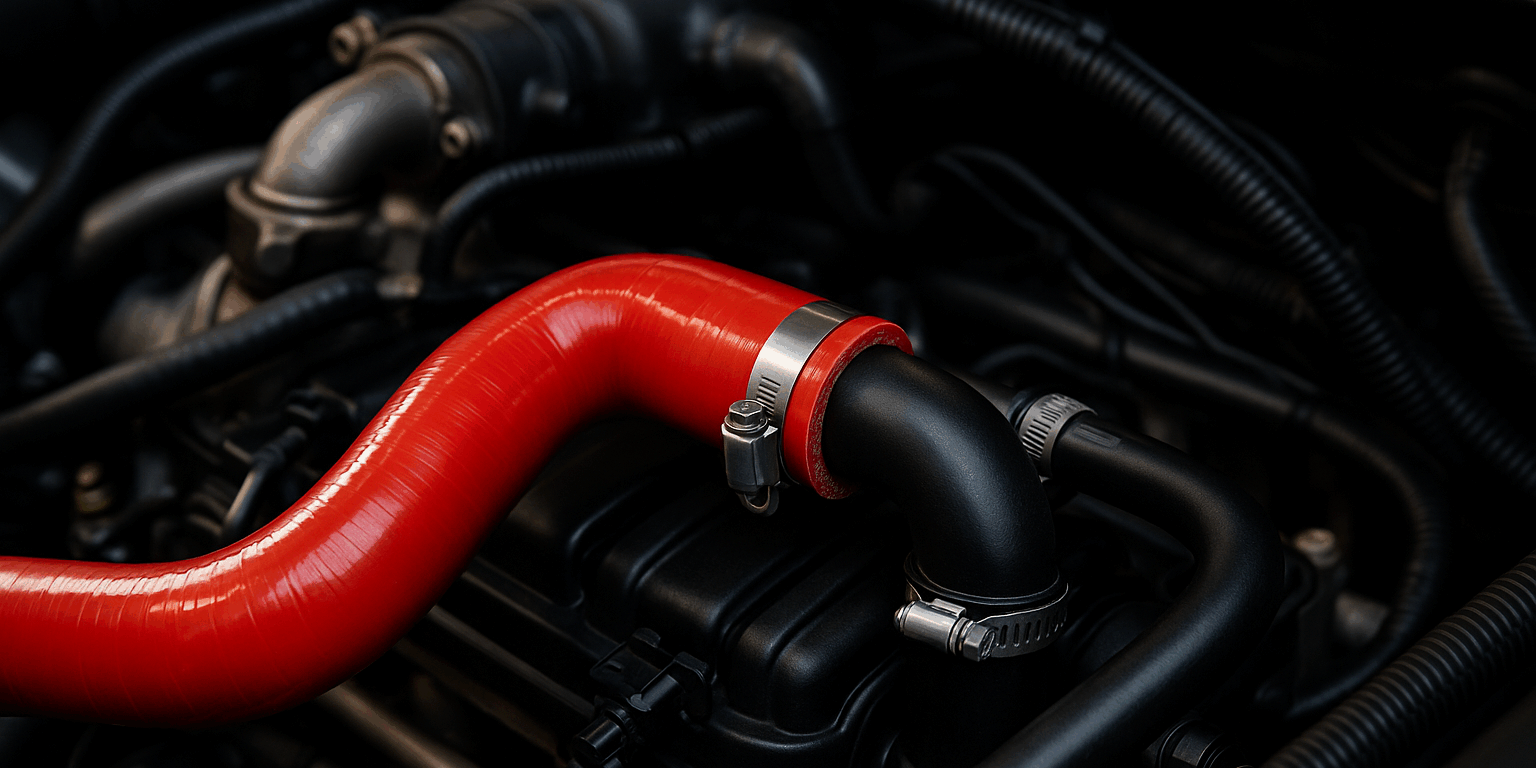
One of the biggest advantages of silicone in the automotive industry is its excellent resistance to both very low and very high temperatures. Unlike many other elastomers, silicone remains flexible and retains its functional properties in a range from approximately –60 °C to +250 °C. In practice, this means that silicone components function perfectly in engine compartments with extreme temperatures or in vehicles used in winter – without hardening or cracking.
Typical applications include:
- Coolant hoses
- Turbocharger hoses
- Seals under engine covers
- Silicone profiles in vehicle doors
3. Durability under UV and Ozone Exposure
Another decisive advantage of silicone is its resistance to ultraviolet radiation (UV) and ozone. Classic materials lose their elasticity, become brittle, and mechanically degrade with prolonged contact with sun or air pollution. Silicone, on the other hand, does not absorb moisture and retains its full functionality even after years of exposure. This makes it ideal for use in exterior seals, covers, profiles, and all components exposed to the elements.
4. Non-flammability and Fire Safety
In the automotive industry, safety dictates material selection. Silicone is inherently a non-combustible material. It does not support flames, does not drip when melting, and retains its structure after brief contact with open fire. This is as important for passenger protection as it is for safeguarding electronics and electrical systems in the vehicle.
Thanks to its special chemical structure, silicone exhibits excellent flame retardancy and heat resistance. Therefore, it is found in:
- Cable and wire protection
- Firewall seals
- Components of power and air conditioning systems
5. Further Advantages of Silicone in the Automotive Sector
In addition to the properties already mentioned, silicone also impresses with:
- chemical resistance – impervious to oils, lubricants, operating fluids, or aggressive cleaning agents.
- permanent elasticity – even after years of intense vibrations, silicone remains flexible, does not tear, and maintains its shape.
- excellent acoustic and electrical insulation – silicone components dampen vibrations, reduce noise, and reliably protect vehicle electronics from overvoltage and moisture.
6. Most Important Applications of Silicone in Vehicle Manufacturing
Due to its exceptional properties, silicone is now an integral part of modern automotive technology. The main areas of application are:
Parts for vibration damping, noise insulation, and electronics protection
Seals, silicone profiles, and silicone hoses/tubes – temperature and chemical resistant
Wrapping, protective, and insulating hoses/tubes – ideal for cable and wire protection
customized automotive solutions – available in various colors, hardnesses, and shapes
FAQ
Which components in vehicles use silicone?
Charge air hoses, coolant hoses, heating hoses, grommets, connector seals, cable insulation, airbag components, headlight and door seals, and sensor encapsulations.
What is the temperature range for silicone in the engine compartment?
Standard VMQ: −50 °C to +200 °C. High-temperature VMQ (HT-VMQ): up to +250 °C — suitable for areas near the exhaust tract, turbocharger, and intercooler. Briefly up to +300 °C.
How does silicone behave under UV radiation and weathering?
Silicone is one of the most UV, ozone, and weather-resistant elastomers. In outdoor applications (door, headlight, and body seals), it typically lasts 15 years and longer without embrittlement.
Is silicone flame retardant?
Standard VMQ is not self-extinguishing. Special compounds with ATH/MDH fillers or phosphorus additives meet UL 94 V-0, EN 45545-2 (railway protection), and automotive-specific requirements for interior and engine compartments.